
Message from the Executive Chief
- Home
- Message from the Executive Chief
Message from the Executive Chief
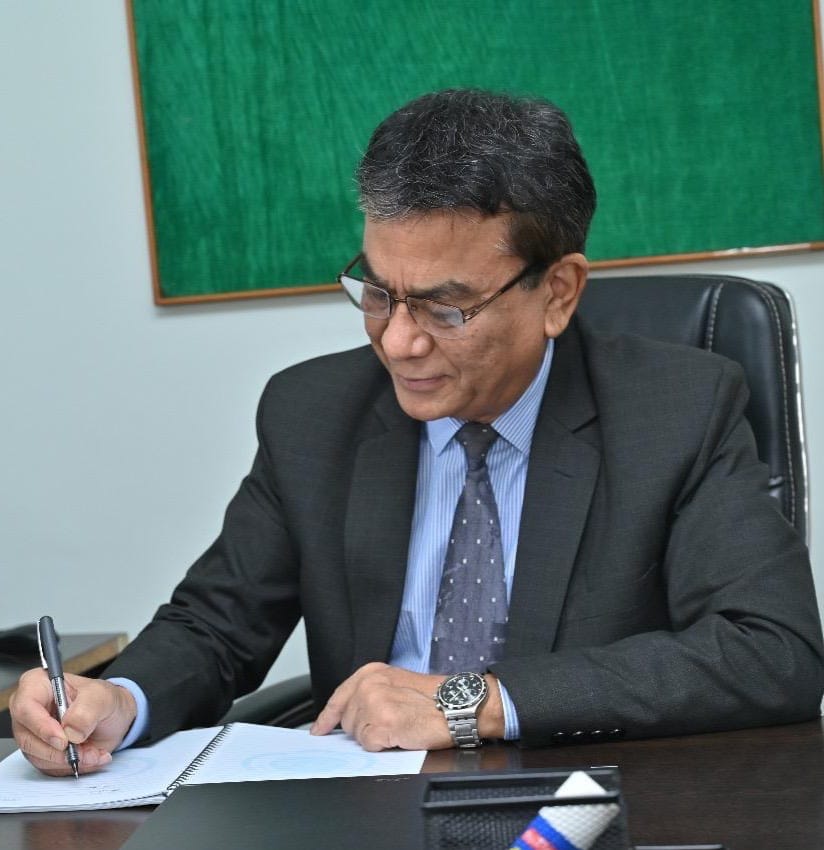
Founding Chairman & Executive ChiefWelcome Speech for The Global Mind Brain Workshop
Respected Chair,
Honorable Chief Guest and Guests of Honor,
Distinguished colleagues, policy makers, and friends,
It is my privilege and honor to welcome you all to this Global Workshop on Mind–Brain Health and Policy Pathways in Nepal, organized by the Nepal Public Health Foundation in collaboration with the Center for Global Epilepsy, Oxford University, and supported by the Department of Health Services, Government of Nepal.
I extend my heartfelt gratitude to Dr. Suresh Chandra Chalise, honorable advisor to the President of Nepal, for joining us as Chief Guest despite his demanding schedule. I also warmly thank our Guests of Honor, Dr. Bikas Devkota, Secretary of Health, and Dr. Anuj Bhattachan, Director General of Health Services. We are privileged to have distinguished guest speakers with us today: Professor Arjun Sen of Oxford University, Professor Jane Hirst of Imperial College London, Professor Manjari Tripathi of All India Institute of Medical Sciences, Professor Pushpa Sharma, Chair of Neuropsychiatry at Nepal Public Health Foundation and Dr Hiroshi Azuma from WHO Nepal. We could not have Dr. Basant Pant physically here today as he is out of valley, but his views will be presented here.
I am delighted to see such a rich representation of academic leaders, policy makers, community activists, and people with lived experience. I also acknowledge Professor Jagadish Agrawal, former Dean of the Institute of Medicine and now Health Advisor to the Prime Minister of Nepal, whose presence adds special significance to this gathering.
Mind–brain disorders are among the greatest public health challenges of our century encompassing psychiatric, neurological and psychosocial disorders, such as stroke, dementia, epilepsy, brain injury, as well as anxiety, depression, mood disorders and schizophrenia. Their burden is measured not only in DALYs and mortality, but also in the financial, social, and emotional costs borne by families and societies.
The statistics are sobering: in 2021, 1.1 billion people worldwide lived with mental disorders, and 3.4 billion with neurological conditions. By 2050, nearly 5 billion people will be affected. Alarmingly, 82% of those affected live in low‑ and middle‑income countries, where resources are scarcest and treatment gaps widest—up to 80% of people receive no care at all.
In Nepal, the situation is compounded by migration, fractured families, and socio‑economic stressors, which are driving an alarming rise in mental and neurological and psychosocial problems. These realities underscore the need to address the social determinants of health alongside biomedical care.
Pathways to Solutions
We know that lifestyle and life‑course interventions—healthy diet, exercise, stress reduction, adequate sleep, social connection, and mental stimulation—protect both mind–brain health and other non‑communicable diseases. Research on neuroplasticity shows that the brain has the power of resilience, and that prevention and early intervention can reverse decline.
Yet barriers persist such as stigma, cultural mismatches, scarce resources, and inadequate infrastructure. In Nepal and across LMICs, innovative strategies are emerging in order to find appropriate responses these barriers. Task‑shifting to community health workers, collaboration with traditional healers, integration into primary care, and community‑based interventions—mothers’ groups, lay counselors, school health programs—are bridging gaps. Technology, mindfulness, and global initiatives such as WHO’s mhGAP are expanding access. The latter is already an integral part of Nepal’s health policy which also integrates the core objectives of Inter-sectoral global plan for Epilepsy and other neurological disorders (IGAP). Furthermore, in Nepal, even the Supreme Court has ordered reforms in mental health care. Globally, academia, WHO, and journals like The Lancet are advancing the agenda. But true transformation will come from communities themselves—motivated, committed, and empowered to lead.
This reality demands a new perspective. We must invert the health care pyramid: placing engaged and empowered communities at the top, supported by primary, secondary, and tertiary systems that recognize the centrality of people. A whole‑systems approach—integrating neuropsychiatry, public health, and social determinants of health—is essential.
These issues were vividly raised at the Global Summit on Mind–Brain Health held at Oxford University last November. Today, only about six months later, we convene this workshop here in Nepal—where the challenges are deeply felt, and where solutions must be rooted in community and equity.
This program will also launch the Center for Global Mind–Brain Health, Nepal, followed by a policy workshop on the Theory of Change in Epilepsy Care, developed by Deepesha Shilpakar when she was a fellow in Oxford, under the guidance of Professors Jane Hirst and Arjun Sen, with contributions from psychiatrists, neurologists, and public health specialists from Nepal.
I recall that speaking at the Oxford event, the Chancellor Lord William Hague had posed a challenging question: How can a summit on mind–brain health truly be global if it remains confined to Oxford premise alone? I believe today’s event in Nepal is a humble but meaningful response to that query.
So, as we gather here, let us pool our resources, expertise, and commitment to confront this burgeoning health challenge of the 21st century. Let us dare to invert the pyramid—placing behavioral change, social determinants of health and community‑based interventions at the core, supported by science, policy, and global solidarity. Together, we can halt and reverse the rising burden of mind–brain disorders, and build systems of care that are equitable, resilient, and humane.
With these words I welcome you all again and hope that this event will be, as the Chinese say, another step in the journey of thousand miles!
Thank you.